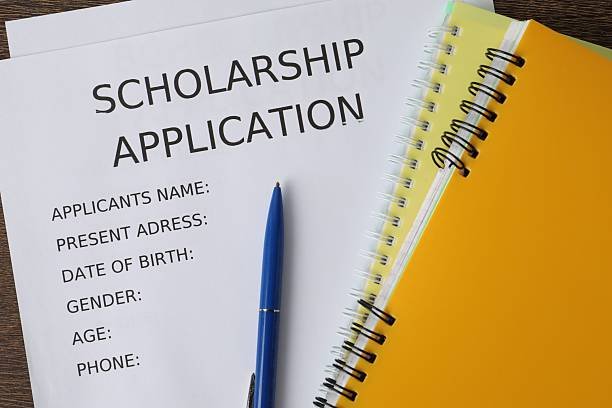
Mistakes to Avoid When Applying for Scholarships: A Complete Guide for Students
A scholarship can change your educational journey—but one small mistake can stand between you and an opportunity you worked hard to earn.
Advertisement
Every year, thousands of students search for scholarships to help fund their education. Some have excellent academic records, impressive extracurricular activities, leadership experience, or compelling personal stories. Yet, even strong candidates can miss out because of simple mistakes during the application process.
Sometimes, the problem is not a lack of qualifications. The applicant may have submitted the wrong document, missed an important requirement, misunderstood the essay question, applied too late, or submitted an application that was too generic.
The good news is that most of these mistakes can be avoided.
Whether you are applying for an undergraduate scholarship, postgraduate scholarship, international scholarship, government-funded scholarship, university scholarship, or private educational award, understanding the common mistakes applicants make can help you prepare a stronger application.
In this guide, we will look at the most important mistakes to avoid when applying for scholarships, how to prevent them, and practical steps you can take to make your application more organized and convincing.
1. Applying Without Checking the Eligibility Requirements
One of the most common scholarship mistakes is applying before carefully reading the eligibility requirements.
It is easy to see a scholarship advertised online, notice the amount of funding available, and immediately want to apply. However, scholarships often have specific conditions that applicants must meet.
Check the Requirements Before Starting
Depending on the scholarship, eligibility may depend on:
- Nationality
- Country of residence
- Age
- Academic qualifications
- Grade requirements
- Field of study
- University or institution
- Academic level
- Work experience
- Leadership experience
- Financial circumstances
- Language requirements
- Admission status
For example, a scholarship may be available only to students studying a particular subject or applicants from specific countries.
Before spending hours preparing an application, make sure you meet the fundamental requirements.
A few minutes spent reading the eligibility criteria can save you hours of unnecessary work.
2. Waiting Until the Last Minute
Another major mistake is starting a scholarship application only a few days before the deadline.
Scholarship applications often require several documents, and some of them cannot be obtained immediately.
Some Documents Take Time
You may need:
- Academic transcripts
- Recommendation letters
- Certificates
- Identification documents
- A personal statement
- A CV or résumé
- Proof of admission
- Financial documents
- Language-test results
- Research proposals
For example, if your application requires two recommendation letters, you cannot assume that your lecturers or supervisors will be available immediately.
They may need several days or even weeks to prepare them.
Create a Scholarship Calendar
One of the easiest ways to avoid deadline problems is to maintain a scholarship calendar.
For every scholarship, record:
- Scholarship name
- Opening date
- Application deadline
- Eligibility requirements
- Required documents
- Essay questions
- Recommendation requirements
- Official application website
- Application status
Try to submit your application before the final day whenever possible.
Technical problems, internet issues, website errors, or missing documents can become serious problems when you wait until the last minute.
3. Submitting a Generic Application
A scholarship committee can often tell when an applicant has copied the same application and sent it to several organizations.
Using the same basic information is understandable, but your application should be adapted to the particular scholarship.
Understand What the Scholarship Values
Different scholarships may focus on different qualities.
One may emphasize academic excellence.
Another may focus on leadership.
Another may prioritize community service.
A research scholarship may place significant importance on research experience and future research plans.
Your application should therefore reflect the objectives of the scholarship.
For example, if the scholarship emphasizes community development, explain your relevant experiences and the impact of your activities.
If it emphasizes academic research, discuss your academic preparation, research interests, and future objectives.
The information you provide should always be truthful, but the way you present relevant experiences can be tailored to the opportunity.
4. Ignoring the Essay Question
Writing a good essay is not enough if you fail to answer the question.
This is one of the most important mistakes to avoid.
Read the Question Carefully
Suppose a scholarship asks:
“Describe a significant challenge you have faced and explain how it influenced your academic goals.”
The committee is not simply asking you to describe your achievements.
They want to understand:
- What the challenge was
- How you responded
- What you learned
- How the experience affected you
- How it influenced your academic direction
Your essay should address those points directly.
Before writing, break the question into smaller parts and make sure your planned response answers each part.
5. Using Too Many Generic Statements
Statements such as:
“I am hardworking.”
“I am passionate about education.”
“I am a dedicated student.”
“I want to change the world.”
may sound positive, but they do not tell the committee much about you.
Show Instead of Simply Telling
Instead of saying that you are hardworking, provide an example that demonstrates your determination.
Instead of saying that you are passionate about your field, explain what experiences created that interest.
Instead of saying that you want to help your community, describe what you have actually done or what specific problem you hope to address.
Specific examples are generally more informative than a long list of positive adjectives.
6. Turning Your Essay Into a Résumé
A scholarship essay should not simply repeat everything written on your CV.
Some applicants write paragraphs like:
“I won several awards, participated in organizations, volunteered at events, achieved good grades, and completed several courses.”
While these achievements may be valuable, simply listing them does not explain why they matter.
Explain the Meaning Behind Your Experiences
Instead of listing every achievement, choose experiences that support your story.
Explain:
- What you did
- Why you did it
- What challenges you faced
- What you learned
- What impact you had
- How the experience influenced your future goals
This allows the committee to understand not only what you have done, but also who you are and what you have learned from your experiences.
7. Providing False or Exaggerated Information
Never exaggerate your qualifications in an attempt to make your application look stronger.
Do not invent:
- Awards
- Leadership positions
- Volunteer experience
- Employment
- Academic results
- Publications
- Certifications
- Projects
Honesty Matters
Your application should accurately represent your achievements.
A modest but truthful application is better than an impressive application built around information that cannot be verified.
If you have limited experience, focus on the experiences you genuinely have and explain them effectively.
You do not need to present yourself as perfect.
You need to present yourself accurately.
8. Uploading the Wrong Documents
With multiple scholarship applications, it is easy to accidentally upload the wrong file.
You might submit an old CV, the wrong transcript, an incomplete essay, or a document intended for another application.
Organize Your Files
Create a separate folder for each scholarship.
For example:
Scholarship Application
- CV
- Transcript
- Personal Statement
- Recommendation Letter
- Certificates
- Identification
- Financial Documents
- Other Supporting Documents
Before submitting, open every file and make sure it is the correct document.
Do not assume that because the filename looks correct, the file itself is correct.
9. Submitting Poor-Quality Documents
A document may be technically uploaded but still be difficult to read.
Blurry photographs, incomplete scans, upside-down pages, or documents with missing sections can create unnecessary problems.
Check Every File Before Uploading
Make sure:
- The text is readable.
- Every page is included.
- Nothing is cut off.
- The document is correctly oriented.
- The file opens properly.
- The required format is used.
- The correct document has been selected.
If the scholarship specifies PDF, for example, follow that requirement rather than uploading a different format unless the instructions allow it.
10. Choosing the Wrong Person for a Recommendation Letter
A recommendation letter can provide valuable independent evidence about your abilities.
However, applicants sometimes assume that choosing the most famous or senior person they know will automatically produce the strongest recommendation.
That is not necessarily the case.
Choose Someone Who Knows Your Work
Depending on the scholarship requirements, an appropriate recommender might be:
- A lecturer
- Teacher
- Academic supervisor
- Research supervisor
- Employer
- Professional supervisor
The important thing is to follow the scholarship’s rules.
A person who knows your academic work, leadership, research ability, character, or professional development may be able to provide more specific information than someone who barely knows you.

11. Asking for Recommendation Letters Too Late
Do not wait until the day before the deadline to ask someone for a recommendation.
Your recommender may have other responsibilities and may not be able to prepare the letter immediately.
Give Your Recommender Useful Information
When requesting a recommendation, provide:
- The scholarship name
- The deadline
- Application instructions
- Your CV
- Your academic information
- Your relevant achievements
- Your future goals
- Information about the scholarship
This can make it easier for them to write a relevant recommendation.
12. Having an Unfocused CV
Your CV should help the scholarship committee quickly understand your background.
A CV that contains every activity you have participated in since childhood can become difficult to read.
Focus on Relevant Information
Depending on the scholarship, your CV may include:
- Education
- Academic achievements
- Work experience
- Research
- Leadership
- Volunteer experience
- Awards
- Projects
- Certifications
- Publications
- Relevant skills
Prioritize information that supports your application.
13. Focusing Only on Financial Need
Financial circumstances can be an important part of many scholarship applications.
However, an application should not necessarily focus entirely on what the scholarship will give you.
Explain What You Want to Accomplish
If appropriate, explain:
- What you want to study
- Why you chose the field
- What influenced your academic goals
- What career you are pursuing
- What skills you hope to develop
- What you hope to contribute in the future
Your financial circumstances can explain why financial support would be important, while your academic and career goals explain what you hope to do with the opportunity.
14. Being Too Vague About Your Future
Statements such as “I want to become successful” or “I want to make a difference” are broad.
Scholarship committees generally need more context.
Make Your Goals Concrete
You can explain:
- Your intended field
- The type of work you hope to pursue
- Problems you are interested in solving
- Skills you want to develop
- The kind of contribution you hope to make
You do not need to know exactly where you will be ten or twenty years from now.
Your goal is to demonstrate thoughtful direction rather than provide an unrealistic prediction of your entire future.
15. Applying Through Unverified Scholarship Websites
The internet contains many legitimate scholarship opportunities, but applicants should be careful when encountering unfamiliar scholarship advertisements.
Verify the Opportunity
Whenever possible, check the scholarship through the official website of the organization providing it.
Look for:
- The official organization
- Clear eligibility requirements
- Official application instructions
- A legitimate contact method
- A clearly stated deadline
- Transparent scholarship information
Be especially cautious about claims that you are guaranteed a scholarship if you pay money first.
Do not provide sensitive personal information to unknown individuals or websites without first verifying the opportunity.

16. Making Mistakes in the Application Form
Applicants sometimes spend a great deal of time writing their essay and then rush through the rest of the application.
This can lead to avoidable errors.
Review Every Section
Check:
- Your full name
- Date of birth
- Contact information
- Education history
- Grades
- Programme information
- Employment history
- Awards
- Activities
- References
- Financial information
Make sure the information is consistent across your application and supporting documents.
For example, if your CV states one graduation date and your application form states another, the inconsistency may raise unnecessary questions.
17. Forgetting to Proofread
A strong scholarship application can be weakened by avoidable spelling and grammar errors.
You do not need to use complicated vocabulary.
Clear writing is more important.
Check More Than Grammar
When proofreading, check:
- Spelling
- Grammar
- Punctuation
- Sentence structure
- Repetition
- Dates
- Names
- University names
- Programme names
- Word limits
Also make sure you have not accidentally mentioned another scholarship in your essay.
That particular mistake can happen when applicants reuse old applications.
18. Ignoring the Word Limit
If a scholarship says an essay should be 500 words, do not assume that submitting 1,200 words demonstrates greater effort.
The word limit is part of the instructions.
Learn to Be Concise
A good scholarship essay does not need to include every detail of your life.
Choose the experiences that best answer the question.
Remove:
- Repeated ideas
- Unnecessary introductions
- Irrelevant stories
- Excessive background information
- Sentences that do not support your main point
A focused essay is easier to read and easier for the committee to evaluate.
19. Failing to Check Your Email After Applying
Submitting your application does not necessarily mean the process is finished.
The scholarship provider may contact you for additional information or invite you to an interview.
Monitor Your Application
After applying:
- Check your email regularly.
- Check your spam folder.
- Save your application reference number.
- Keep copies of submitted documents.
- Watch for official updates.
If you applied using a particular email address, make sure you continue monitoring that account.
20. Not Preparing for a Scholarship Interview
Some scholarships include an interview stage.
Applicants sometimes spend weeks preparing their written application but do not prepare for the possibility of an interview.
Questions You May Encounter
Depending on the scholarship, you could be asked questions about:
- Your academic goals
- Your chosen field
- Your achievements
- Your challenges
- Your leadership experience
- Your community involvement
- Your career plans
- Why you are interested in the scholarship
- How your studies connect to your future plans
Rather than memorizing long speeches, understand your own experiences and goals well enough to discuss them naturally.
21. Giving Up After One Rejection
Scholarship applications can be competitive.
A rejection does not automatically mean that you are unqualified or that your goals are unrealistic.
There may be many applicants competing for a limited number of awards.
Use Rejection as Feedback
If feedback is provided, study it carefully.
Even when feedback is not available, you can review your application and ask:
- Did I meet all the eligibility requirements?
- Did I answer the essay question directly?
- Did I provide strong examples?
- Were my documents complete?
- Did I submit early enough?
- Could my personal statement be clearer?
- Can I improve my CV?
- Can I strengthen my academic or extracurricular profile?
Each application can teach you something useful for the next one.
How to Build a Strong Scholarship Application
Avoiding mistakes is important, but it is only one part of the process.
Start With Research
Search for scholarships that genuinely match your profile.
Do not focus only on the largest awards.
A smaller scholarship may still contribute significantly toward tuition, accommodation, books, transportation, or other educational expenses.
Prepare Your Core Documents
Create updated versions of commonly requested documents.
These may include:
- CV
- Academic transcript
- Personal statement
- Certificates
- Identification documents
- Recommendation information
Keep them organized so that you are not starting from zero every time you find a new opportunity.
Develop Your Personal Story
Think about the experiences that shaped your education and career goals.
Consider:
What motivated me to choose this field?
What challenges have influenced my journey?
What have I accomplished?
What have I learned?
What do I want to do in the future?
Why is this scholarship relevant to that journey?
Your answers can provide the foundation for stronger personal statements.